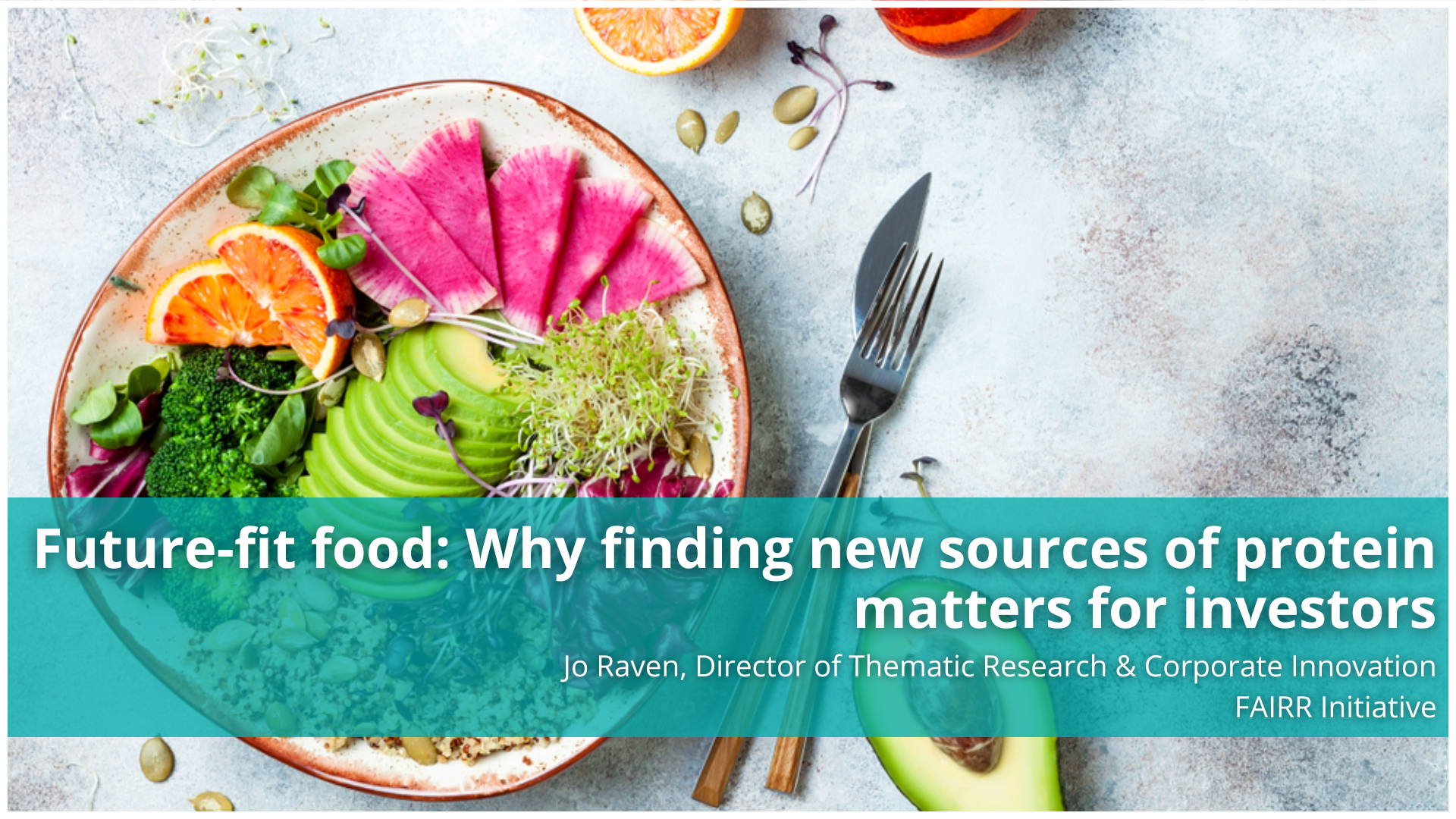
Future-fit food: Why finding new sources of protein matters for investors
Jo Raven, Director of Thematic Research & Corporate Innovation, FAIRR Initiative

Note: The views expressed on these pages are the opinions of their respective author(s) only and do not necessarily reflect the views and opinions of UKSIF.
This website should not be taken as financial or investment advice or seen as an endorsement or recommendation of any particular company, investment or individual. While we have sought to ensure information on this site is correct, we do not accept liability for any errors.
Future-fit food: Why finding new sources of protein matters for investors
Jo Raven, Director of Thematic Research & Corporate Innovation, FAIRR Initiative
The resilience of our food systems has never been more crucial. Shifting towards a broader array of protein sources is not only a strategic imperative for businesses and policymakers, but also a critical step in ensuring food security and planetary wellbeing for generations to come.
In finance, diversification is the cornerstone of risk management, spreading investments to minimise exposure to the failure of any single asset. A similar logic applies for protein diversification – not putting your eggs in one basket – reducing dependence within the global food system on a narrow set of animal-based proteins by expanding portfolios to include plant-based, fermented, cultivated and hybrid options (FAIRR, 2024)
Companies heavily exposed to animal protein supply chains face material climate, nature and public health risks, with climate-related shocks alone projected to drive up to 1.3 trillion US dollars in losses for major livestock producers by 2030 if business continues as usual, according to the recently published Protein Diversification Engagement (Phase 2) Report (FAIRR, 2025). Diversifying protein sources can therefore increase supply chain resilience, reduce the likelihood of disruption and support a more stable, forward-looking food system (FAIRR, 2025).
At the same time, high consumption of red and processed meat is linked to higher risks of bowel cancer and cardiovascular disease. Yet in many high income countries, men in particular still exceed these levels (FAIRR, 2024).
By deliberately shifting towards a more diverse mix of protein sources, from plants to novel food technologies such as cellular agriculture, investors can help build healthier diets, cut emissions and restore nature – in short, a food system that works better for both people and planet (FAIRR, 2025).
The new reality
The story of protein diversification over the past decade is one of rapid experimentation, painful lessons and a return to fundamentals. When FAIRR first started engaging companies on this theme ten years ago, protein was barely on the sustainability agenda. Then came the rise of meat-analogue brands – foods that are designed to mimic the taste and texture of meat – followed by a sharp reset as some products failed to meet taste and price expectations.
Today, the market is shifting towards simpler, minimally processed plant-based wholefoods – beans, lentils, chickpeas, nuts and seeds – as well as established categories like plant-based dairy, where consumers more easily recognise the nutritional and culinary value (FAIRR, 2025).
At the same time, demand for protein dense foods keeps rising, driven by fitness culture and the spread of GLP 1 drugs for weight loss, which are reshaping food choices and reinforcing the premium placed on high-quality protein (AAEA, 2026).
Yet corporate and investor action has not kept pace with either the risks or the opportunities. In FAIRR’s engagement with 20 major retailers and brand manufacturers, around 70% now flag health and wellness as a material issue for their business, but only about 30% have nutrition expertise at board level, and a quarter still lack any formal health strategy (FAIRR, 2025).
Many retailers continue to prioritise launching processed meat and dairy alternatives even as they acknowledge these products are less popular (AFN, 2025).
What’s in the way
Early generation meat analogues struggled on several fronts: many consumers were underwhelmed by taste and texture; products were often priced at a premium that became untenable during the cost of living crisis; and marketing frequently failed to connect the dots between these products and clear health or sustainability benefits (AFN, 2025).
Thankfully, companies are still innovating: FAIRR’s engagement with leading retailers and manufacturers found that roughly 90% launched at least one new alternative protein product in the past year, and there is growing recognition that diversification is necessary if we are to meet climate and health goals (FAIRR, 2025).
The next chapter
We are at an important juncture for the future of food. Diets are fast becoming a core indicator of health and sustainability: they cut across climate, nature, water and public health, and they are increasingly being scrutinised by regulators, investors and citizens alike (EAT Forum).
Instead of treating plant based innovation as synonymous with ultra processed meat analogues, we should see leading companies putting plant based wholefoods at the centre of product development, directly addressing concerns around ultra processed foods while keeping protein quality high.
That shift should go hand in hand with a quieter but no less powerful revolution in ingredient lists: secondary and tertiary substitutions that swap in higher fibre, lower carbon plant proteins in everything from ready meals to snacks and dairy, improving the nutritional profile and the environmental footprint of everyday products.
In other words, the next phase of protein diversification will be less about headline grabbing “future foods” and more about systematically relaying the foundations of the global diet.
The views expressed on these pages are the opinions of their respective author(s) only and do not necessarily reflect the views and opinions of UKSIF.
This website should not be taken as financial or investment advice or seen as an endorsement or recommendation of any particular company, investment or individual. While we have sought to ensure information on this site is correct, we do not accept liability for any errors.